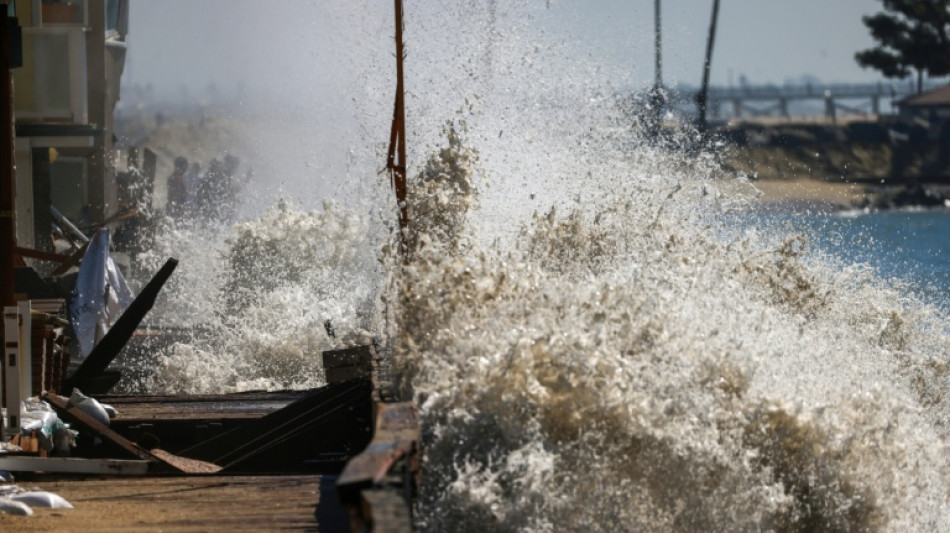
Powerful waves lash California coast as storm threatens more damage / Photo: David Swanson - AFP
Powerful waves thrashed communities along California's southern coast Friday, damaging homes and sending water cascading through streets as residents braced for more potential damage wrought by Tropical Storm Rachel.
The storm system churning in the Pacific was expected to make a rare West coast landfall near the California and Mexico border early Sunday, according to the National Weather Service (NWS), packing potential for strong winds and heavy rains that could cause further destruction and coastal flooding.
The powerful surf exacerbated by the morning's high tide slammed into coastal communities, including Long Beach, where signficiant sections of the boardwalk crumbled under the pounding waves and several homes suffered serious structural damage.
Areas including Long Beach and Malibu continued to face likely damaging sea-water flooding over the weekend, the NWS warned.
High tides of more than seven feet (2.1 meters) will be common each morning, said the US weather agency.
Local officials earlier this week distributed sandbags to residents in vulnerable communities.
Rachel had been downgraded from hurricane to tropical storm but even in a slightly weakened state threatened coastal hazards including flooding, a risk expected to peak around Sunday morning, Carol Ciliberti, a NWS meteorologist in southern California, told AFP.
A tropical storm watch is in effect for all of San Diego County, which borders Mexico, marking only the second time a tropical storm watch has ever been issued in California.
- Potentially historic El Nino -
The latest NWS advisory said the sytem's maximum sustained winds are near 45 miles (75 kilometers) per hour, with higher gusts.
Rachel is the latest named entrant in this year's unusually active Pacific hurricane season, weather charged by the recurring El Nino pattern that this time around is particularly extreme.
El Nino, which occurs approximately every two to seven years, raises surface temperatures in the central and eastern Pacific Ocean and causes global changes in winds and rainfall.
In the Pacific, the weather phenomenon weakens vertical wind shear that allows storm systems there to brew stronger.
Human-caused climate change can worsen El Nino's impacts. A warmer atmosphere holds more moisture, allowing rains to turn more extreme.
This year's El Nino has continued to strengthen. US climate prediction scientists this week reported that the likelihood the pattern would reach strong-to-very strong levels, potentially making history, into the winter was now at 83 percent.
Another factor contributing to flood risk in California is an enormous wave on the US West Coast, a so-called Kelvin wave that can raise sea levels by up to a foot (30 centimeters).
Also known as a "coastal trapped wave," the enormous swell of water up to 18 miles (30 kilometers) wide creates higher seas, aggravating already heightened threats to the coast.
H.Brunner--HHA