Derek Tierney Outlines Ten-Year Strategy for National Digital Health System
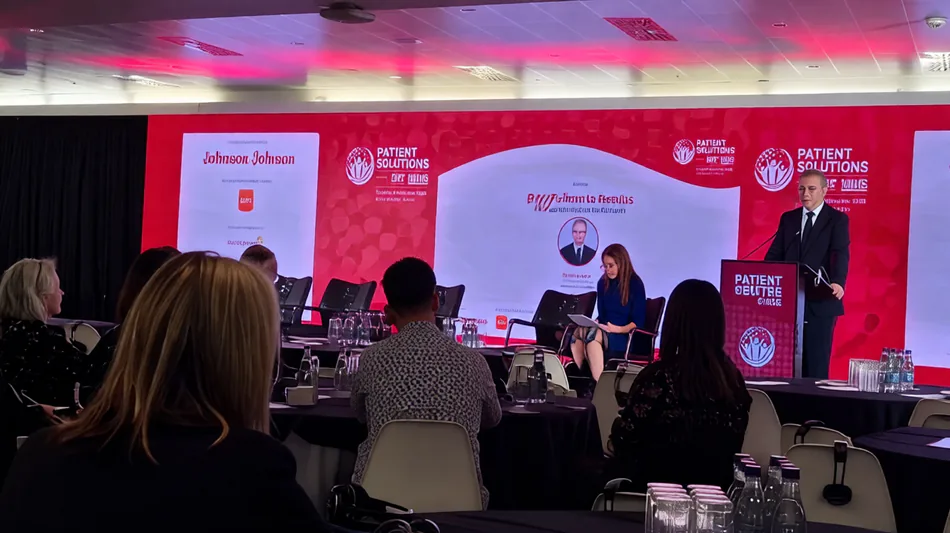
Ireland’s transition to a fully digitized national health system will require a sustained ten-year investment and a fundamental shift in digital literacy among healthcare professionals, according to Department of Health Secretary General Derek Tierney. Speaking at the Patient Solutions 2026 conference, Tierney outlined the government's strategy to replace a fragmented legacy infrastructure with a unified electronic health record (EHR) designed to improve patient outcomes and operational efficiency across the country.
The Department of Health has committed to a decade-long strategy to establish a fully digitized national health system, emphasizing that the initiative must prioritize human capability over mere technological adoption. Derek Tierney, Secretary General of the Department of Health, outlined this vision at the Patient Solutions 2026 conference, warning that success depends on building digital literacy among healthcare professionals rather than simply installing new software.
Tierney described the current state of Ireland’s health infrastructure as highly fragmented due to historical investment patterns. He noted that the system currently relies on hundreds, if not thousands, of disparate platforms that do not connect with one another. The goal of the new ten-year investment strategy is to replace this disjointed network with a standardized, fully digitized environment.
"It’s not technology for technology’s sake – it cannot be," Tierney said. "We will have failed from day one" if the system fails to integrate effectively with the daily workflows of medical staff. He characterized the transition as a comprehensive change program requiring active participation from both health professionals and the public over the next six to eight months to design the national electronic health record (EHR).
To ensure the new system serves the entire population consistently, Tierney stressed the importance of capturing diverse perspectives during the design phase. "We do want to hear everybody’s voice and everybody’s perspective," he stated, noting that without broad input, the service risks failing to provide uniform care regardless of a patient's location.
Progress toward this goal is already underway. The Health Service Executive (HSE) app currently registers approximately 250,000 users, and the department has shortlisted several international vendors for the tendering process to develop the national EHR. However, Tierney clarified that the rollout will not be instantaneous. Before the full EHR is implemented, the HSE plans to introduce "Community Connects," a health record system designed to support community-based care providers who currently rely on pen and paper or basic technology.
This intermediate step aims to build digital capability gradually. "We build the capability slowly and we start to map the care pathways in the community to standardize and provide consistent care," Tierney explained, adding that this approach avoids jumping directly from paper records to complex electronic systems without adequate preparation.
Addressing hospital capacity and productivity, Tierney highlighted the human consequences of operational inefficiencies. He argued that while hospitals remain central to the health service, the system must be strengthened to allow patients who can safely receive care elsewhere to do so, thereby creating capacity for those requiring acute hospital treatment.
"For many patients, access remains the ultimate test," Tierney said. "Behind every waiting list number is a person waiting for certainty, diagnosis or treatment, sometimes with pain, anxiety or reduced independence." He linked productivity directly to patient welfare, noting that a theater starting on time can enable an additional procedure, better diagnostic use can lead to earlier diagnoses, and coordinated discharges can free up beds in emergency departments.
Tierney concluded that while investment is critical, spending alone does not measure success. The true metrics of the digital transformation will be shorter waiting times, timely treatment, increased care delivered closer to home, and improved clinical outcomes.
The Patient Solutions 2026 conference, co-hosted by Irish Medical Times and MIMS Ireland, focused on identifying practical, scalable solutions to enhance patient care. The event featured discussions on the intersection of policy, technology, and clinical practice as Ireland navigates its digital health transition.
F.Fischer--HHA