Lebanon, Israel hold new talks in US as ceasefire nears end / Photo: Kawnat HAJU - AFP
Lebanon and Israel held new peace talks in Washington on Thursday, as their latest ceasefire -- considered to still be in place despite hundreds of deaths in Israeli strikes -- nears its end.
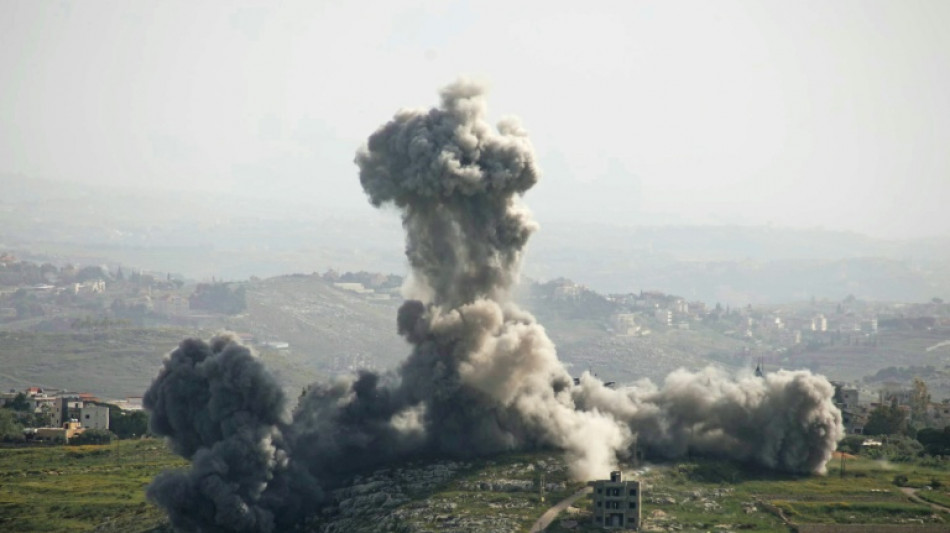
Israel's military said it was striking Hezbollah targets in south Lebanon on Thursday after warning residents of several towns and villages there and in the country's east to evacuate. It also said a Hezbollah drone fell in Israeli territory, wounding several civilians.
Lebanon's state-run National News Agency (NNA) reported Israeli airstrikes on the south and east, including in areas not covered by the warning, a day after the health ministry said intense raids killed 22 people, eight of them children.
One diplomat privy to the two-day talks in Washington said discussions started just after 9:00 am (1300 GMT) at the State Department.
Lebanese and Israeli representatives last met on April 23 at the White House, where US President Donald Trump announced a three-week ceasefire extension and voiced optimism for a groundbreaking agreement between the countries, which have technically been at war for decades.
Trump at the time made the bold prediction that during the three-week extension he would welcome Israeli Prime Minister Benjamin Netanyahu and Lebanese President Joseph Aoun to Washington for a historic first summit between the countries.
The summit did not happen, with Aoun saying a security deal and an end to Israeli attacks were needed before such a landmark meeting.
Hezbollah lawmaker Ali Ammar on Thursday reiterated his group's rejection of the direct talks, saying they amounted to "free concessions" to Israel.
The ceasefire, which began on April 17, lasts through Sunday.
- Ongoing strikes -
Still, Israeli strikes have killed more than 400 people during the truce, according to an AFP tally of health ministry figures.
Israel has vowed to keep pursuing attacks against Hezbollah, the Shia armed group and political movement backed by Iran's ruling clerics.
Hezbollah drew Lebanon into the Middle East war on March 2 with rocket fire at Israel in retaliation for the killing of Iran's supreme leader Ayatollah Ali Khamenei in US-Israeli strikes days earlier.
"Anyone who threatens the State of Israel will die because of his actions," Netanyahu said last week after an Israeli strike on Beirut's southern suburbs killed a senior Hezbollah commander.
A Lebanese official told AFP that the country would seek "the consolidation of the ceasefire" during the talks in Washington.
"The first thing is to put an end to the death and destruction," the official told AFP on condition of anonymity.
Iran has demanded a lasting ceasefire in Lebanon before any agreement to end the wider war in the region, and it has frustrated Trump by refusing his appeals for an accord on his terms.
The Middle East war has roiled the global economy and impacted hundreds of millions of people worldwide.
Israeli attacks since March 2 have killed more than 2,800 people in Lebanon, including at least 200 children, according to Lebanese authorities, a toll Hezbollah says includes its fighters.
Israel has pounded Hezbollah strongholds in the south and Beirut's southern suburbs, and has invaded the border region, parts of which Israel previously occupied for around two decades until withdrawing in 2000.
- Disarmament push -
Lebanon has repeatedly called for Israel to withdraw its troops from the south, and insists on extending state sovereignty over all its territory as part of a commitment last year to disarm Hezbollah.
Washington has endorsed Beirut's commitment to do so, while pressing it to take more action.
The United States believes "comprehensive peace is contingent on the full restoration of Lebanese state authority and the complete disarmament of Hezbollah," a State Department statement said.
"These talks aim to break decisively from the failed approach of the past two decades, which allowed terrorist groups to entrench and enrich themselves, undermine the authority of the Lebanese state, and endanger Israel's northern border," it said.
Thursday's meeting will be the third round of talks between the two countries, which have no diplomatic relations.
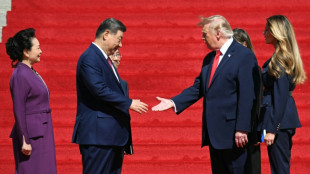
Unlike the previous two rounds, neither Secretary of State Marco Rubio nor Trump will participate as both are on a state visit to China.
The US mediators include the ambassadors to Israel and Lebanon -- respectively Mike Huckabee, an evangelical pastor and staunch supporter of Israel's regional ambitions, and Michel Issa, a Lebanese-born businessman and golf partner of Trump.
Lebanon was represented by special envoy Simon Karam, a lawyer and diplomat who has defended Lebanon's sovereignty, as well as its ambassador in Washington.
Israel's team will include its ambassador in Washington, Yechiel Leiter, a Netanyahu ally who is close with the Israeli settler movement in the occupied West Bank.
burs-sct/bgs
A.Baumann--HHA