ECB holds rates steady after Lagarde says to quit early / Photo: Kirill KUDRYAVTSEV - AFP
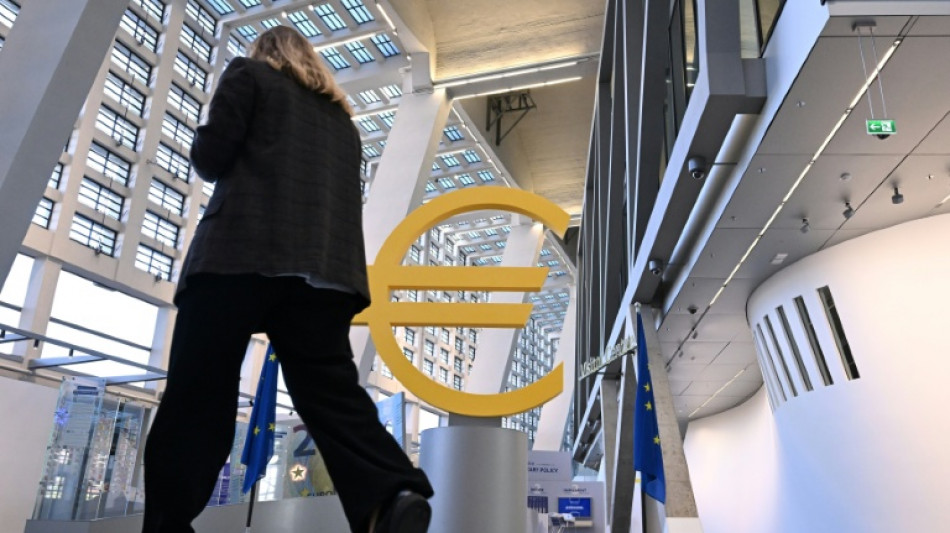
The European Central Bank on Thursday held interest rates steady despite rising inflation fuelled by the Iran war energy shock, just hours after President Christine Lagarde announced she would step down early.
As expected by economists, the central bank for the 21 nations that use the euro left its benchmark rate unchanged at 2.5 percent, after having already lifted it twice this year.
The ECB is seeking to walk a fine line between tamping down inflation -- which hit a three-year high of 3.8 percent in September -- and not putting too much pressure on the eurozone economy.
The press conference after the rate decision is expected to focus on France's deteriorating public finances after the country's bond yields, which reflect the cost of government borrowing, surged to their highest levels since 2002.
There was no direct mention of France in the ECB's statement, though it noted that "financing conditions have tightened since the governing council's last meeting (in September), which is likely to weigh on inflation and growth."
While noting that energy prices were still rising due to the drawn-out conflict in the Middle East, "underlying inflation has remained broadly stable so far and wages do not show a material response at this stage".
"The increased magnitude and duration of the energy shock, as well as the implications for indirect and second-round effects, are likely to drive up inflation and lower growth," it added.
"The governing council remains well positioned to navigate the current elevated uncertainty," it said.
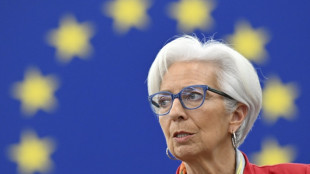
The rate decision came just hours after Lagarde announced she would step down in February next year, ahead of the official end of her term in October 2027.
- Succession race -
This will allow European leaders to pick her successor before France's presidential elections in spring, with officials fearing a far-right victory would complicate negotiations.
When she addresses the press later, Lagarde will likely face questions about her next move -- which is not yet clear -- and her likely successor.
France's mounting debt woes have prompted questions about whether the ECB could, for the first time, use a crisis-fighting tool aimed at combating moves in sovereign debt markets that the bank thinks could blunt its monetary policy moves.
However, the criteria to activate the yet-to-be-used Transmission Protection Instrument (TPI) are strict, and most observers believe France's problems do not meet the threshold.
Lagarde, who also once served as France's finance minister, has reacted coolly when asked about the prospect of deploying the TPI.
Asked about France's rising yields earlier this month, she responded: "The primary and first solution lies at home in France. And it has to do with fiscal policies."
Investors will also be closely watching Lagarde's language for any signals that the rising cost of government borrowing could reduce the likelihood of future ECB rate rises.
Higher government borrowing costs usually feed into higher household borrowing costs since banks will not lend to people at a lower rate than states, potentially relieving the ECB of the need to raise rates itself to keep inflation in check.
Most economists predict the ECB will make the final hike of its current tightening cycle in December, when it will be armed with updated growth and inflation forecasts.
bur-sr/vbw/js
H.Graumann--HHA