Spain high-speed train collision kills 31, injures 80 / Photo: Javier SORIANO - AFP
A high-speed train collision south of Madrid killed 31 people and injured 80 on Wednesday, with the toll likely to rise, regional authorities said, in Spain's second such disaster this year.
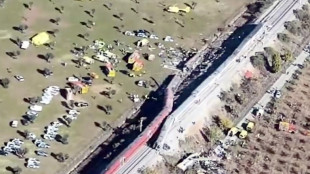
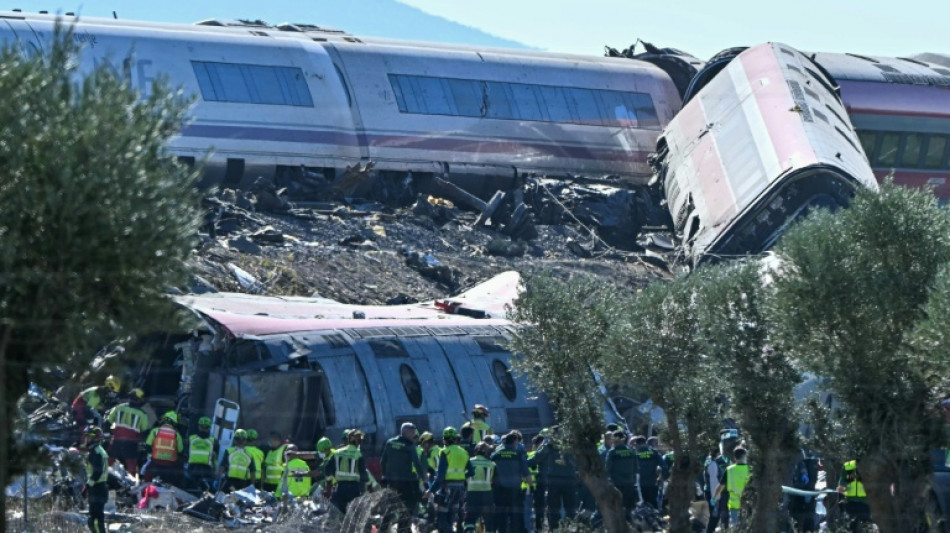
AFP reporters on the scene in the central region of Castilla-La Mancha saw one train embedded into another and some carriages lying on their side in tangles of metal debris at the bottom of an embankment.
Dozens of emergency services vehicles were racing to and from the site and helicopters hovered above during a frantic search for survivors.
A spokeswoman from the Castilla-La Mancha government told AFP at least 31 people had died and that another 80 were injured.
Castilla-La Mancha's leader Emiliano Garcia-Page told reporters that more victims were likely as "it has not yet been possible to reach the bottom of the carriages."
State railway operator Renfe confirmed in a statement that the main high-speed line from Madrid to southern Spain had been suspended after one of its services suffered an accident with a train from private Spanish company Iryo.
A spokesperson for the Spanish emergency services told AFP the trains collided just before 9:00 am (0800 GMT) in the municipality of Urda, around 130 kilometres (80 miles) south of Madrid.
- Rail safety under scrutiny -
The accident comes one month before Socialist Prime Minister Pedro Sanchez, who faced heavy criticism for this year's first disaster, seeks to overturn unfavourable polls and extend his eight-year premiership in an early general election on November 29.
Sanchez said on X that he was "shocked" by the accident and sent "my love, solidarity and support to all the victims and their families".
He cancelled his participation in a summit on obesity in Madrid after the news broke, while his Socialist party suspended all its campaign activities.
Condolences flooded in from across Spain and Europe. The Spanish royal household said on X it was "shocked and concerned" by the accident, conveying its support to the victims, their loved ones and the emergency services.
An EU spokeswoman said the bloc was "ready to help Spain if needed", while European Commission chief Ursula von der Leyen said "Europe mourns" with the victims after the "devastating news".
Spain's high-speed rail network has received huge investment in recent years, growing to become the world's second-largest after China and a source of national pride.
But Wednesday's accident comes after another collision between two high-speed trains outside the southern village of Adamuz in January left 46 dead, which raised major questions about safety on the country's railways.
That crash was Spain's deadliest train accident since 2013, when 80 people died after a train veered off a curved section of track outside the northwestern city of Santiago de Compostela.
Both of this year's accidents happened on the line linking Madrid to the southern city of Seville.
One of the country's busiest routes, it was Spain's first high-speed line when it opened in 1992 to coincide with the Seville universal exposition.
P.Meier--HHA