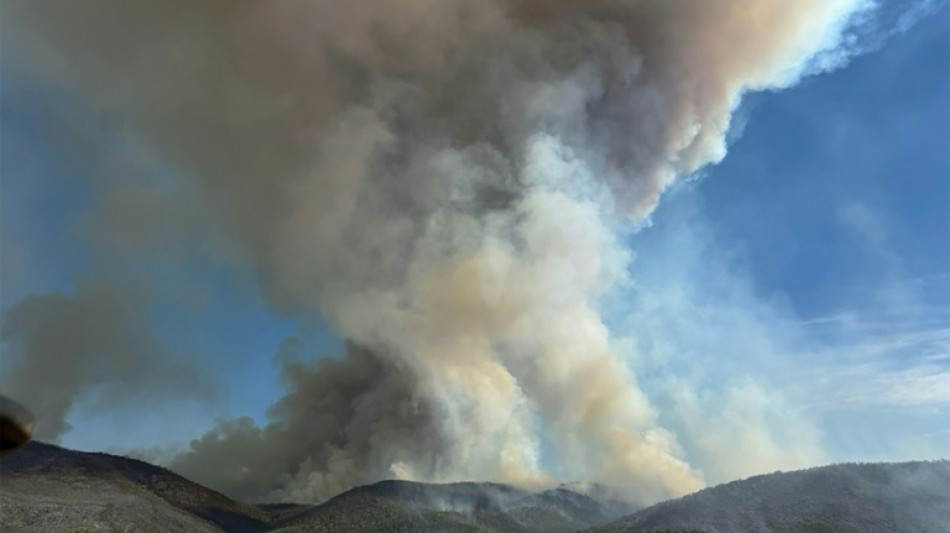
Scores of homes razed, one dead in Australian bushfires / Photo: Handout - Forest Fire Management Victoria/AFP
Bushfires have razed hundreds of buildings across southeast Australia, authorities said Sunday, as they confirmed the first death from the disaster.
Temperatures soared past 40C as a heatwave blanketed the state of Victoria, sparking dozens of blazes that ripped through more than 300,000 hectares (740,000 acres) combined.
Fire crews tallied the damage as conditions eased on Sunday. A day earlier, authorities had declared a state of disaster.
Emergency Management Commissioner Tim Wiebusch said over 300 buildings had burned to the ground, a figure that includes sheds and other structures on rural properties.
More than 70 houses had been destroyed, he said, alongside huge swathes of farming land and native forest.
"We're starting to see some of our conditions ease," he told reporters.
"And that means firefighters are able to start getting on top of some of the fires that we still have in our landscape."
Police said one person had died in a bushfire near the town of Longwood, about two hours' drive north of state capital Melbourne.
"This really takes all the wind out of our sails," said Chris Hardman from Forest Fire Management Victoria.
"We really feel for the local community there and the family, friends and loved ones of the person that is deceased," he told national broadcaster ABC.
Photos taken this week showed the night sky glowing orange as the fire near Longwood tore through bushland.
"There were embers falling everywhere. It was terrifying," cattle farmer Scott Purcell told ABC.
Another bushfire near the small town of Walwa crackled with lightning as it radiated enough heat to form a localised thunderstorm.
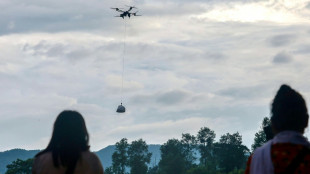
Hundreds of firefighters from across Australia have been called in to help.
Australian Prime Minister Anthony Albanese said he was talking with Canada and the United States for possible extra assistance.
Millions have this week sweltered through a heatwave blanketing much of Australia.
High temperatures and dry winds combined to form some of the most dangerous bushfire conditions since the "Black Summer" blazes.
The Black Summer bushfires raged across Australia's eastern seaboard from late 2019 to early 2020, razing millions of hectares, destroying thousands of homes and blanketing cities in noxious smoke.
Australia's climate has warmed by an average of 1.51C since 1910, researchers have found, fuelling increasingly frequent extreme weather patterns over both land and sea.
Australia remains one of the world's largest producers and exporters of gas and coal, two key fossil fuels blamed for global heating.
P.Garcia--HHA