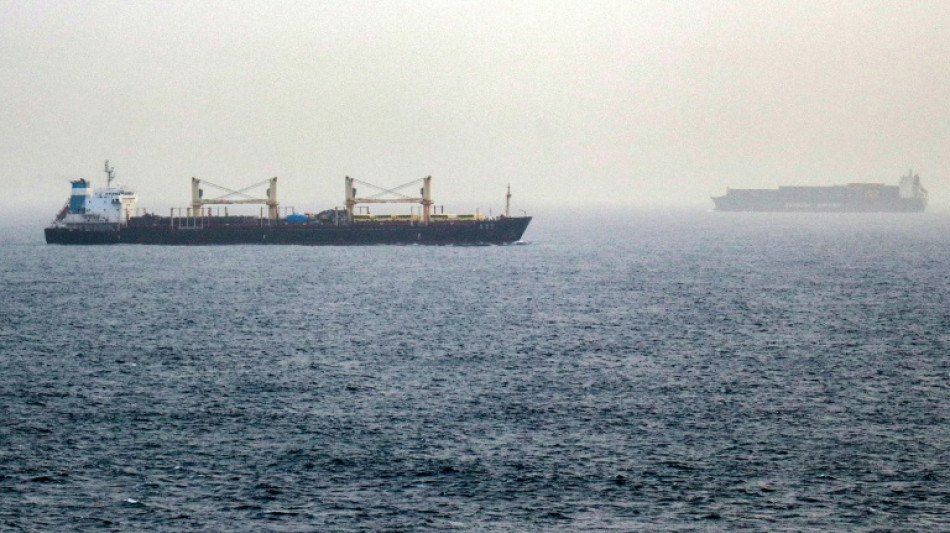
More than 120 killed in Yemen's worst clashes in years: sources / Photo: Khaled ZIAD - AFP/File
A major offensive by Yemen's Houthis to seize control of the gateway to the Red Sea has left more than 120 people dead, sources told AFP Friday, the country's deadliest clashes in years.
Fighting erupted on Thursday, after the Iran-backed Houthis launched a ground assault along with rocket and drone attacks near coastal areas, vying for control of the narrow Bab al-Mandab strait at the Red Sea's southern entrance.
Yemen, embroiled in more than a decade of civil conflict, in July became the latest country to be drawn into the Middle East war as the Houthis upended a 2022 truce with the Saudi-backed government.
Since then, the Houthis have imposed a maritime blockade of Saudi Arabia and repeatedly attacked its ships in the Red Sea -- a vital alternative route for oil exports after Iran all but halted Gulf shipments by blockading the Strait of Hormuz.
The rebels are now trying to tighten their hold over the Red Sea, one of the world's busiest shipping lanes, which they have disrupted with attacks on passing vessels since the Gaza war broke out in 2023.
The Houthi offensive aims to cut off the government-held port city of Mokha, under fire for weeks, and advance towards areas bordering the Bab al-Mandab, military sources told AFP.
The rebels have seized elevated sites overlooking government positions near the Red Sea and the city of Taiz further inland, a military source and a Taiz official told AFP, requesting anonymity.
The Houthis could target ships from these elevated positions, they said.
The toll rose to 129 on Friday, according to an AFP tally compiled from several sources, up from an earlier count of 81.
A Yemeni military official speaking on condition of anonymity told AFP that 66 of his men had been killed, while medical and military sources close to the Houthis said at least 62 militants had died.
Another medical source said a civilian had also been killed.
- Reinforcements sent -
Although the Houthis do not control areas bordering Bab al-Mandab, they hold the key port city of Hodeida north of Mokha.
"They are going for Bab al-Mandab," said Mohammed al-Basha, of the US-based risk advisory Basha Report.
The Houthis want to control the hills overlooking Bab al-Mandab and Mokha before attacking the coast, a Yemeni official in Aden, the government's base since it was ousted from the rebel-held capital, Sanaa, in 2014.
The government has sent reinforcements to Taiz from Aden on Saudi orders, he said.
"The Houthis feel that if they capture Bab al-Mandab or Mokha port they will be in a better position of power to negotiate with the government and the Saudis," Basha added.
With Iran's closure of Hormuz, the Bab al-Mandab chokepoint has gained increased importance as a transit route for oil from Saudi Arabia, the world's biggest exporter of crude.
The narrow waterway connects the Red Sea -- and, via the Suez Canal, the Mediterranean -- to the Indian Ocean.
In July, a fragile truce between the Houthis and the government fell apart after the rebels welcomed an Iranian plane to Sanaa, setting off a spate of attacks.
They later announced a maritime blockade of Saudi Arabia and began hitting its ships and territory.
O.Rodriguez--HHA