Bolivian president says 'narcoterrorists' behind crippling protests / Photo: AIZAR RALDES - AFP
Bolivia's embattled president on Monday signaled dwindling patience for protests that have paralyzed the country, moving closer to enacting a state of emergency that would allow the military to intervene.
For weeks protestors have marched and erected roadblocks, bringing Bolivia to a near standstill -- and pushing up food and fuel prices and causing shortages of basic goods.
Riot police have fired tear gas in attempts to clear the blockades, but have been forced to pull back under gunfire that has wounded several officers.
Protesters hurled stones and burned tires and at least 14 civilians were also injured, the ombudsman's office said.
The protestors are demanding that US-backed conservative President Rodrigo Paz's fledgling government tackle a deep economic crisis, while others have demanded that he step down.
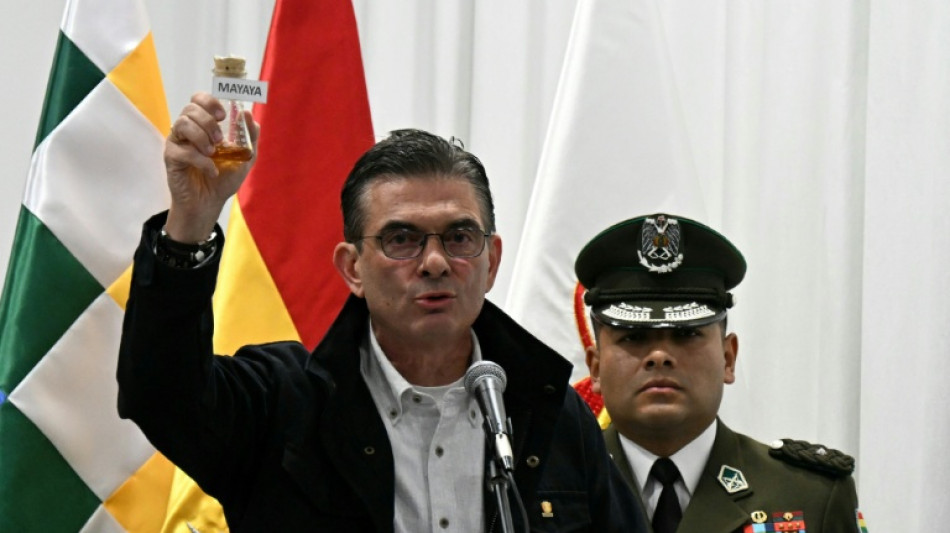
Amping up his rhetoric Monday, Paz blamed "narcoterrorists" for the unrest and warned their "days are numbered."
On Sunday, the legislature passed a new law paving the way for Paz to declare a state of emergency which would authorize military deployment to repress the movement and clear the blockades.
Paz has suggested that former president Evo Morales and his coca-growing supporters are pushing protests to destabilize his government, Bolivia's first conservative administration in two decades.
"Our security is put at risk when narco‑terrorism, and the priorities of certain actors, are not aligned with our democracy, our constitution," Paz said in a signing ceremony for the new law on states of emergency.
"They put their own interests above those of Bolivian society."
- 'Food baskets are empty' -
Waving white flags and chanting "Peace for La Paz," hundreds of Bolivians marched through the city center on Monday demanding an end to the roadblocks.
"We can no longer bear the hunger of the people, whose food baskets are empty," Ninoska Diaz, a vendor who left her market stall to join the march, told AFP.
Paz on Sunday wrote on X that that the capital La Paz and second city El Alto were "still facing difficult times, but concrete progress is also beginning to be made," including on fuel distribution.
Pro-business Paz took office in November promising to resolve the country's worst economic crisis in decades, but his unpopular economic reforms and failure to respond to social demands have roused public ire.
Morales -- in hiding from charges related to his relationship with a teen with whom he allegedly fathered a child -- is accused of fomenting the unrest.
On Friday, US President Donald Trump's new Shield of the Americas alliance -- an anti-cartel coalition that includes pro-US administrations in Argentina, Bolivia and Chile among other countries -- gave Paz its unequivocal backing.
M.Huber--HHA