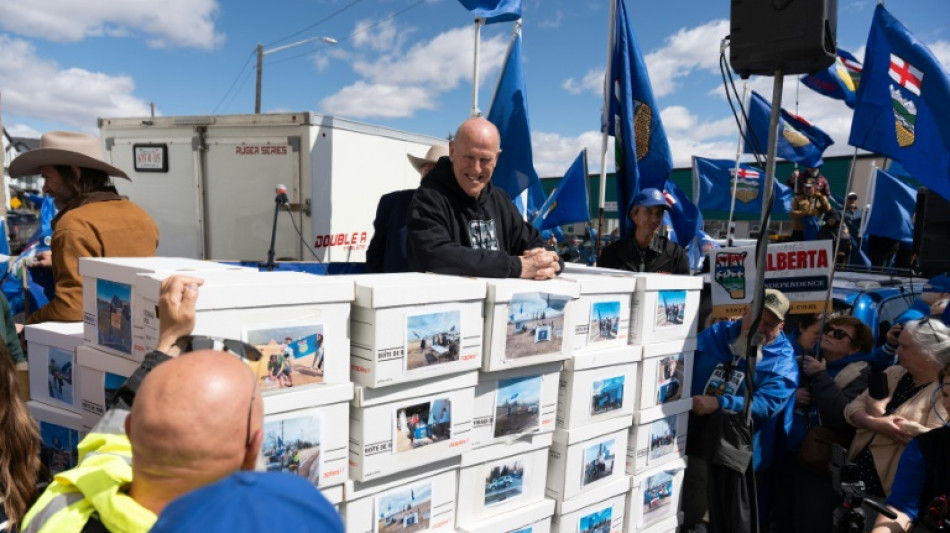
Canada PM compares 'dangerous' Alberta separatist bid to Brexit / Photo: Henry MARKEN - AFP
Canadian Prime Minister Mark Carney on Monday compared Alberta's plans to consider separating from Canada to Brexit, calling it "dangerous" and suggesting people may not appreciate the consequences of their vote.
Carney was the governor of the Bank of England in 2016 when Britain voted to leave the European Union and led the central bank as the UK navigated the complex process of exiting the bloc.
He said Britons were not informed about the full consequences of their vote.
"I saw firsthand what happened in the United Kingdom when the view was, vote for this, it'll be soft, and then we'll negotiate," Carney told reporters in Ottawa.
"They're still, ten years later, trying to undo what people didn't think they were voting for, but what they ended up having."
Separatists in Canada's oil-rich Alberta province say they have collected the signatures of more than 300,000 supporters, enough names under Alberta law to force a referendum on leaving Canada.
But an Alberta judge shut down the process, saying the citizens' initiative was invalid because the separatists had failed to consult with Indigenous groups whose rights could be threatened if the province separated from Canada.
Alberta's conservative Premier Danielle Smith has called the judge's decision "erroneous" and said she would go ahead with her own ballot question, structuring the question so that it does not violate the ruling.
In October, Smith said she plans to ask Albertans if they want her government "to commence the legal process necessary to hold a binding referendum" on independence, stressing she personally supports the province remaining in Canada.
Asked about Smith's ballot question on Monday, Carney recalled Brexit and offered "an observation from experience."
"In these separation issues, it is often advanced that -- vote for this and it's a free option, vote for this and we will strengthen our hand in a future negotiation. That is a very dangerous bluff," the prime minister said.
Polls show that roughly 30 percent of Alberta's five million people support independence, a record high figure.
The separatist camp accuses Ottawa of stifling Alberta's oil industry with excessive federal influence, while blocking investment over what they view as unreasonable concerns about the environment.
Even if the separatists lose a prospective referendum, leaders on both sides say the process will have permanently changed Canadian politics.
H.Graumann--HHA