Cities show cleaner transport policies can reduce severe air pollution
Air pollution is associated with about 8 million premature deaths a year, but evidence from cities including London, Paris and Barcelona points to practical ways to reduce exposure.
Air pollution affects almost everyone and is associated with about 8 million premature deaths worldwide each year. Its effects extend across the body and have been linked to conditions ranging from miscarriage to dementia, while global action continues to lag behind scientific knowledge of the harm.
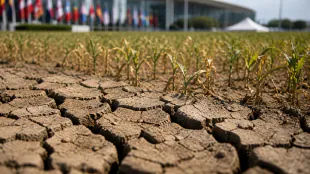
Tens of millions of people in Indonesia have faced dense smoke from slash-and-burn agriculture worsened by hot weather. Ground-level ozone produced by vehicles and industry has become a major summer threat in India, where communities outside large cities have also protested over toxic coal dust. Climate-driven wildfires spread polluted air across the northern hemisphere during the summer, and wildfire smoke is already linked to about 1.5 million deaths globally each year.
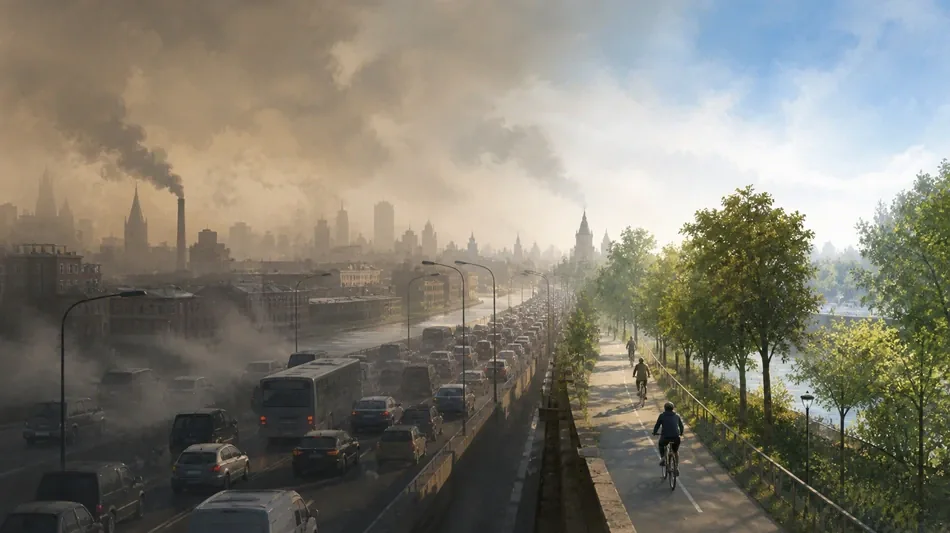
Several cities have reported progress. Levels of fine particulate matter and nitrogen dioxide in Paris have fallen by more than half since 2005. Barcelona has nearly 168 miles, or 270km, of cycle lanes and traffic-restricted superblocks. Beijing, Shenzhen and Chengdu have met pollution-reduction targets, while Mexico has acted on industrial emissions, Bogotá has reduced dust and Nairobi has introduced a monitoring system alongside new air-quality goals.
In London, an observational study by Queen Mary University of London, published in The Lancet Public Health, followed nearly 1,700 children and compared them with a similar group in Luton. London children, whose lungs had previously been significantly smaller, reached roughly the same lung capacity as the Luton group during the period extending from before the introduction of the ultra-low emission zone until 2022.
London's Ulez was introduced by mayor Sadiq Khan in 2019 and expanded in 2021 and 2023. It charges £12.50 a day for higher-polluting vehicles that fail to meet its standards and has sharply reduced nitrogen dioxide. The study could not prove causation, but co-author Chris Griffiths said clearer air following the zone was associated with faster lung growth.
The UK also launched an alert service for vulnerable people during periods of high pollution. England's chief medical officer, Sir Chris Whitty, described air pollution as a solvable health problem whose greatest effects fall on children, pregnant women and people with cardiovascular or lung conditions.
Measures cited by researchers and officials include clean-air zones, safer cycling, incentives to replace heavily polluting cars, better public transport, enforcement against industrial polluters and a shift from fossil fuels to renewable electricity. Such policies have often faced political and business opposition, but voters later backed leaders associated with them in Paris and Barcelona.
Indoor pollution is another major source of premature death. About 3 million people die each year from indoor air pollution, particularly where biomass and solid fuels are used for cooking. More than $3bn has been pledged to an International Energy Agency clean-cooking campaign. Studies have also linked gas-stove pollution to 40,000 premature deaths in Europe.
Cop31 is due to focus on electrifying transport, heating, industry and cooking. Moving those activities from fossil fuels to clean electricity would reduce both greenhouse-gas emissions and exposure to harmful pollutants.
E.Mariensen--HHA