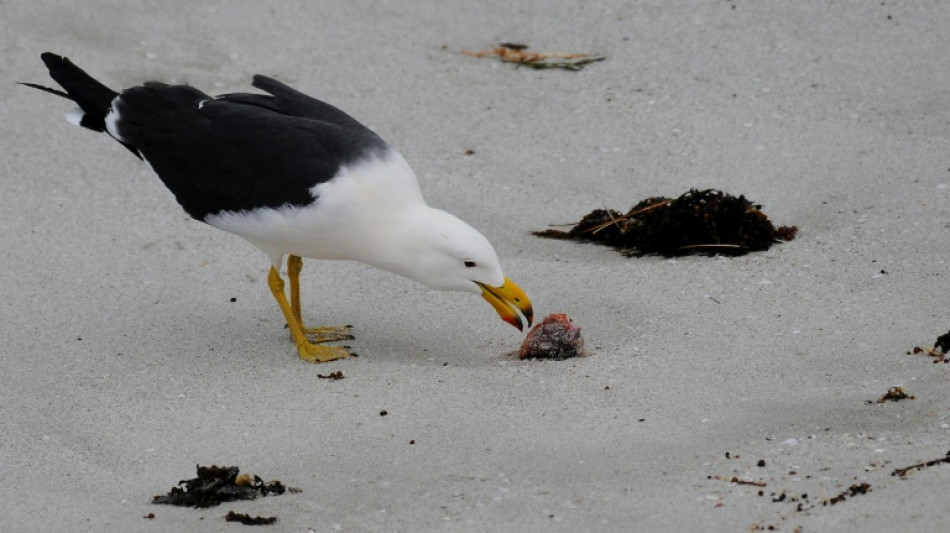
H5 bird flu detected in second Australia state / Photo: Greg WOOD - AFP
Scientists have detected the highly contagious H5 bird flu strain in a second Australian state, the nation's agriculture minister said on Wednesday.
Australia was for years the only continental landmass to be free of the H5 strain, which has caused severe disease and high death rates in poultry and wild birds worldwide.
Two H5 cases have been confirmed in migratory birds found in the state of Western Australia, with officials now warning of a third infection found hundreds of kilometres (miles) away in South Australia.
"This is obviously concerning, but given the spread of H5 globally it is not unexpected that other migratory birds may have arrived at other locations across the Australian coastline," Agriculture Minister Julie Collins told reporters.
"At this stage there is no evidence of mass mortalities. There is also no evidence of infection in poultry or in our agricultural production system," Collins added.
"There continues to be a low risk to human health."
The confirmation of H5 spread has the potential to cause significant disruptions.
One of the country's largest poultry producers has locked down farms in Western Australia in a bid to stay disease-free.
Neighbouring Papua New Guinea briefly suspended imports of Australian eggs and chicken meat -- although this has since been lifted with some exceptions.
"We have continued to engage constructively with the Papua New Guinea government since their notification of suspension to have these trade restrictions removed," Collins said.
Chief government veterinary officer Beth Cookson said scientists were still piecing together the details of how H5 might be spreading.
- Vulnerable species -
So far it seemed to be limited to migratory seabirds without threatening other vulnerable native populations, she said.
"We've only just received the advice on the South Australian detection. We're still in the investigation phase," she told reporters.
"It is a seabird, a migratory species, and there is no indication that it has spread beyond those populations."
There has been concern that the deadly disease could add to the extinction risks faced by Australian fauna, many of which are unique to the vast continent.
Almost half of Australia's wild bird species, and 83 percent of its mammals, are found nowhere else.
The wild birds most affected by the H5 strain include waterfowl, shorebirds, seabirds and birds of prey.
Marine mammals have also been affected, with some detections in other animals such as cats, goats, alpacas and pigs.
Officials have said they are investigating if the disease arrived in Australia via birds migrating from the sub-Antarctic.
Scientists said last week the H5 bird flu strain had killed more than 13,000 elephant seal pups after infecting a breeding colony on the remote Heard and McDonald Islands, one of Australia's external territories in the sub-Antarctic.
E.Gerber--HHA