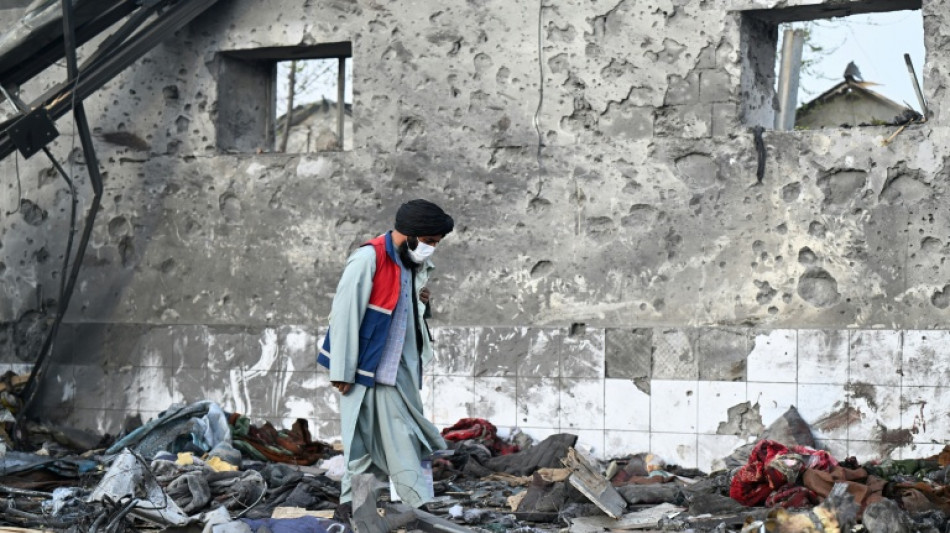
Mass burials expected for victims of Kabul drug rehab centre strike / Photo: Wakil KOHSAR - AFP
Afghans readied on Wednesday to bury their dead from this week's Pakistani air strike on a Kabul drug treatment centre, as an international NGO confirmed that hundreds were killed and wounded.
The Taliban authorities have said that around 400 people were killed and more than 200 wounded on Monday night, in the deadliest attack yet in the recent upsurge in violence between the two neighbours.
Islamabad, which denies deliberately targeting the centre, accuses Kabul of harbouring extremists who have carried out cross-border attacks on its territory.
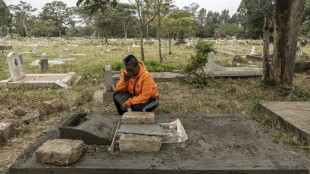
Two large excavators were seen digging on a hill in Kabul, and interior ministry spokesman Abdul Mateen Qani confirmed a mass funeral would be held there later Wednesday.
"Not all 400 bodies will be buried in Kabul because some of them were transferred to their provinces," he added.
Obtaining immediate independent confirmation of exact death tolls is difficult in Afghanistan and Pakistan, with attacks often in hard-to-reach places and conflicting information.
AFP journalists at the scene on Monday evening and Tuesday morning saw at least 95 bodies extracted from the rubble at the devastated centre.
Jacopo Caridi, the Afghanistan country director for the Norwegian Refugee Council, a humanitarian NGO, said they had teams on the ground at the same time, and one building in the compound was "completely burned and destroyed".
"From what we saw and what we discussed with the others involved in the (emergency) response, we can say that there were hundreds of killed and wounded," he told AFP.
"The facility was supposed to house around 2,000 patients, and it was heavily damaged."
Recovery of bodies has proved difficult because of the debris and collapsed structures.
Caridi described the scene, which included body parts in the debris, as "shocking" and indicated that definitively counting and identifying the victims would be difficult.
"In Europe, we have the systems to identify the people, even from body parts," he added.
"But here, I don't know if they have these systems. But what I saw was a finger in one place, a foot in another place, a hand in one location. It was really horrific," said Caridi.
- Mediation stalled -
Afghanistan and Pakistan have faced calls for an immediate end to the conflict, with the overall civilian death toll mounting and concern about those displaced.
The UN said before Monday's strike that at least 76 Afghan civilians had been killed in the fighting, and that more than 115,000 families had been forced from their homes.
"Our call is clear," said Caridi. "The protection of the civilians is a must for all the parties in conflict, and both the parties in conflict need to respect international humanitarian law."
Mediation efforts, however, have so far proved fruitless.
The focus of Gulf countries, which led early attempts, has shifted to the situation in their own backyard since the start of US-Israeli strikes on Iran last month.
Before Monday's strike, China had dispatched a special envoy to mediate between Afghanistan and Pakistan, pledging to play a "constructive role in de-escalating tensions".
Russia's special representative for Afghanistan, Zamir Kabulov, has said Moscow is "concerned" by the fighting, and could step in to broker a deal if asked.
"We are trying to find a compromise solution that would make it possible to stop the clashes and move to diplomacy," he was quoted as saying by the pro-Kremlin outlet Izvestia.
"Russia will be ready to consider such an option if both sides simultaneously turn to it with a request for mediation. So far, this has not happened."
Afghan Foreign Minister Amir Khan Muttaqi said Tuesday that the country would continue "proportionate and legitimate defensive measures until the other side ceases its violations".
Pakistan's information minister Attaullah Tarar said its attacks were against "military and terrorist infrastructure" as part of Islamabad's "ongoing war against terrorism".
T.Schmidt--HHA