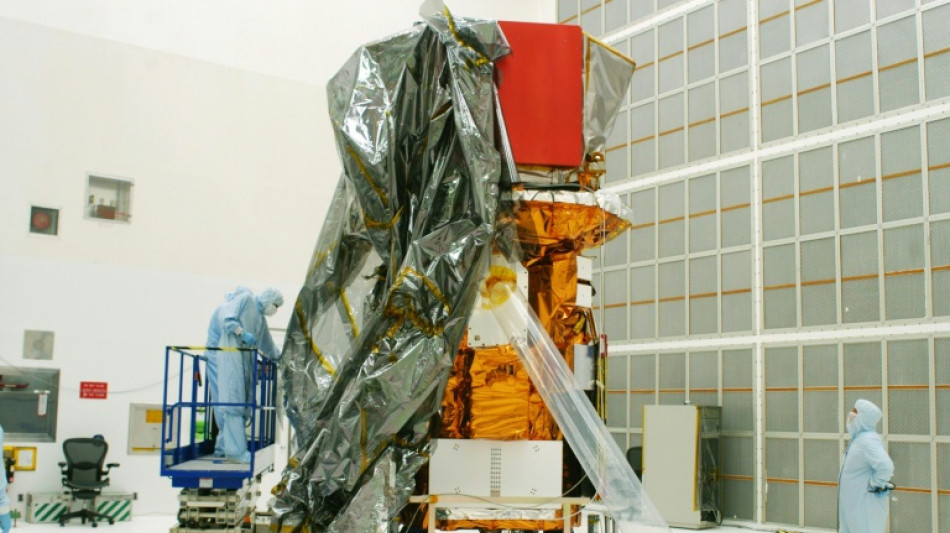
NASA satellite rescue mission fails / Photo: Handout - NASA/AFP
A complicated mission to save a NASA satellite from burning up in the atmosphere has failed, the US space agency said Wednesday, as the rescue spacecraft could not be controlled.
The Swift space telescope, which studies the most powerful explosions in the universe, will now likely plunge back to earth and disintegrate along the way later this year.
The unprecedented $30 million dollar mission attempted to send a robot to grab the telescope and move it farther into orbit.
"This is not the outcome we were working toward, but it does not change why this mission was worth attempting," NASA Administrator Jared Isaacman said.
Planners had hoped the mission would pave the way for giving other satellites a second life.
"The team moved with extraordinary speed to give Swift a chance to carry out more science while advancing capabilities America will need for satellite servicing in the future," Isaacman added.
Developed by American startup Katalyst, the unmanned spacecraft was launched on July 3 by a small rocket named Pegasus, which was itself launched from an airplane.
However, on July 28 the company said the spacecraft had been in an out-of-control spin for 72 hours with multiple problems including a loss of communications.
In announcing the mission failure on Wednesday, Katalyst cited "ongoing attitude control issues" as the reason it and NASA were calling it off.
NASA said that the spacecraft would still attempt to reach the Swift telescope with the hope of giving scientists and engineers lessons for similar future missions.
The agency launched Swift in 2004 to study gamma-ray bursts.
J.Burmester--HHA