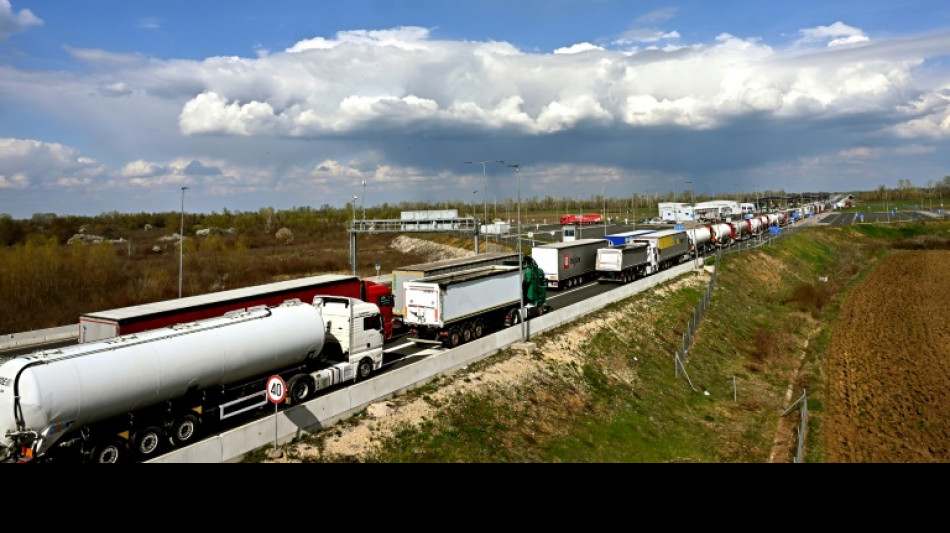
Bosnian truckers blocked EU freight terminals for a day over visa rules / Photo: ELVIS BARUKCIC - AFP
Bosnian truck drivers blockaded two freight terminals on the border with EU member Croatia on Monday in a one-day protest over visa rules limiting their time in the bloc.
The EU has since October been rolling out its long-delayed Entry/Exit System (EES), which Balkan drivers consider "discriminatory" because it subjects them to the same 90-days-in-180 rule as tourists.
"Our work has been made administratively impossible," Hidajet Muratovic, one of the protest organizers, told AFP at the Orasje crossing.
The blockades were lifted late on Monday, after drivers were promised talks with Bosnian authorities on Wednesday to discuss possible solutions.
The rollout, due to take full effect on April 10, has led to stricter checks, with many drivers now being turned back at the border with Croatia, which joined the EU in 2013.
"In March alone, we had more than 200 drivers turned back at the Croatian border," trucker Atif Hadzidedic said during the blockade at the Svilaj crossing.
In late January, hundreds of truck drivers from several Balkan countries staged days-long blockades at multiple terminals to protest the EES rollout.
The blockades in Bosnia, Serbia, Montenegro and North Macedonia were lifted after talks were announced in Brussels, but those discussions have yet to produce a decision.
Serbian truck drivers have postponed new blockades until April 10, when the visa rules are due to take full effect.
Balkan economies were losing around 100 million euros ($115 million) a day in goods exports, the Serbian Chamber of Commerce said in January.
The EU is the Balkans’ main trading partner, accounting for more than 60 percent of the region’s total trade, most of it carried by road.
Trade in goods between the EU and the Balkans exceeded 83 billion euros in 2024.
In Bosnia, 93 percent of trade goes by road.
H.Brunner--HHA