Colombia scrambles to find survivors as quake kills 240 / Photo: Joaquin SARMIENTO - AFP
Colombian volunteers on Tuesday dredged through rubble, searching for survivors from an earthquake that killed at least 240 people and leveled more than a hundred homes and office buildings.
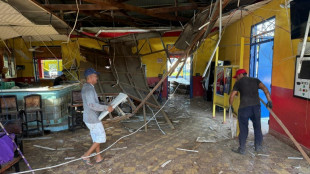
The quake struck several cities across Colombia's western coffee-growing region and Pacific belt at 7:34 am (1234 GMT) Monday, toppling structures, swaying towers and tossing roof tiles to the ground.
Electricity was all but gone in the hardest-hit city of Pereira, with a population of over half a million.
Many residents spent the night sleeping on the street, fearing more deadly aftershocks or because their homes had sustained damage.
"Since yesterday we've been wondering what will become of our lives," 38-year-old housewife Gloria Giraldo, whose neighborhood had tumbled around her, told AFP.
The 7.4-magnitude quake was Colombia's strongest in a century, according to the US Geological Survey, and one of its deadliest natural disasters in years.
Figures provided by local authorities showed that at least 240 had been killed, while the disaster injured over 1,300 people.
Colombian President Abelardo de la Espriella -- just days into the job -- declared a state of emergency and vowed a concerted rescue effort.
The new leader promised rent subsidies for those affected during a visit to Pereira Tuesday.
- 'Someone whistled back' -
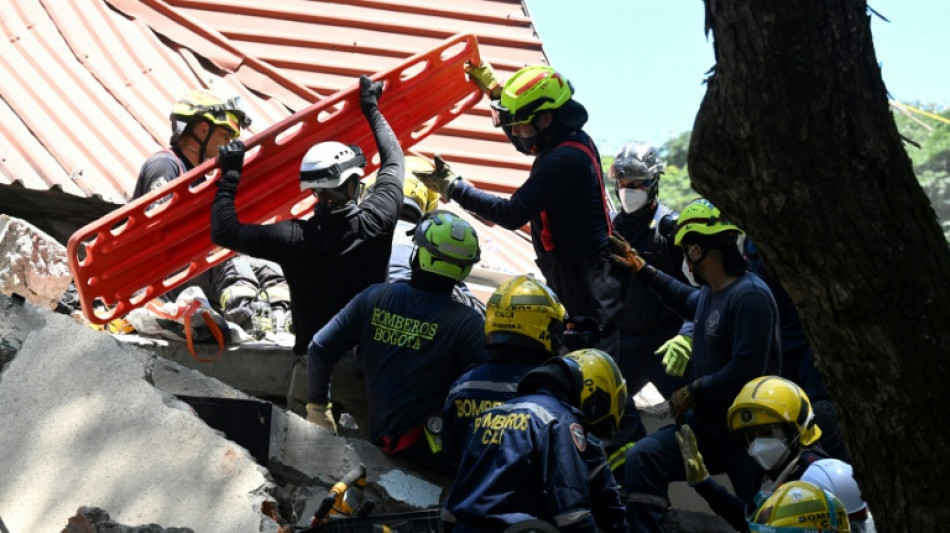
In Cali, volunteers quickly went to work with picks, basic tools and their own hands to try to find survivors.
Rescuers formed human chains to remove bricks and masonry, stopping every few minutes to listen for signs of life from those trapped below.
Andres Felipe Mejia was among those who joined a makeshift crew.
"We are trying to get everyone out alive," he told AFP.
"One of the rescuers asked anyone trapped to whistle, and someone whistled back," he said near a pancaked building.
"They pulled out a man and a baby, but the wife is still in there."
"A lot of people have come, with supplies, with food, helping the firefighters, helping the people," he said.
Hospitals in five Colombian cities were put on red alert Monday and a nighttime curfew was declared in Cali, according to local authorities.
"It felt like the end of the world -- cars and motorcycles driving the wrong way, everyone searching for their loved ones," said volunteer rescue worker Nelson Moreno.
- 'Overwhelming' -
Tattoo artist Andres Hernandez said he was worried about his family and friends, adding that he would stay awake because structures around him were "on the verge of collapsing."
There were scenes of destruction in several cities, including Manizales, where the tower of a beloved neo-Gothic cathedral crumbled.
In Quibdo, the capital of Colombia's Choco department, local official Jenny Rivas said public services and communications had been "virtually shut down."
"People ran out naked, people jumped from the second floor of their homes," Quibdo resident and law student Wilmer Cuesta said.
Dentist Julian Pena said he "ran outside carrying nothing" after feeling strong tremors and found hundreds doing the same.
"People were praying in the street. It was overwhelming," he told AFP.
- Overnight searches -
The quake was felt across Colombia, including the capital Bogota, where crowds rushed out into the street in their pajamas.
At a depth of 110 kilometers (68 miles), the quake was also felt in neighboring Ecuador and Panama.
Experts at the US Geological Survey said the quake was likely caused by movement along a deep fault within the Nazca tectonic plate.
The devastation comes less than two months after powerful twin quakes rattled neighboring Venezuela, killing more than 6,300 people and leaving tens of thousands homeless.
Messages of support came in from across the region and the world, including offers of assistance from the European Union, Israel and Mexico.
Pope Leo XIV was "deeply saddened" and "raises his prayers to the Lord for the prompt recovery of those affected by this tragedy," the Vatican said Tuesday.
United Nations Secretary-General Antonio Guterres expressed condolences to the quake victims and said the UN was "supporting the Government-led response as requested."
The administration of US President Donald Trump, a strong supporter of De La Espriella, announced $15.5 million in emergency relief on Monday.
W.Taylor--HHA